
The Microphones
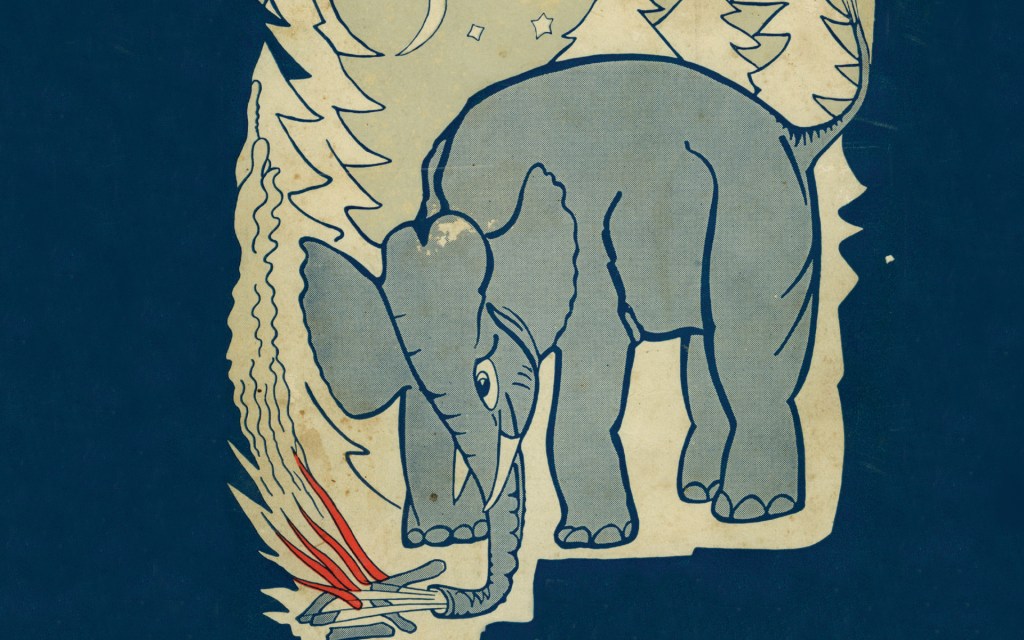
Intentionally uncomfortable and claustrophobic album.
Listening to this record is being trapped in the head of a man who is singing and smiling to avoid contemplating his hollow mind and heart. This music exists in its own grey island. An empty island. The Microphones are somehow able to create a kind of ambient, spatial, atmospheric record while making you feel intensely alone. Even a first-time listener can pick up on the underlying eeriness and distress in this record, often represented by soft ambient noise, an old bell, the boyish, cracking, and close-up vocals, and of course, the troublesome lyrics.
The record begins with the song, “I Want Wind to Blow”
Using lyrics like
“the rain dried up… there’s no black or white… no golden sun — I want wind to blow — take me up, don’t bring me back… “
Phil Elverum sets up a fitting description of loss and a lack of ability to deal with it. His only desire is to be swept away by the wind never to see the ground again.
The title track, which immediately follows, is one of the greatest cries for recognition and purpose within the Indie-Folk genre.
He claims he fanatically stripped his shirt off in his yard and no one noticed, nor did they care. His world only grows grayer… “the glow is gone.” This song is noisy and sudden but somehow intimate. Phil’s famous vocal slides on this track impress a vivid sensation of irritation and discontentment.
The next track, “The Moon” moves abruptly from pleasant acoustics to deafening noise, juxtaposing the peace and chaos in Phil Elverum’s head. The contrast and abrupt change between these two ideas is a common theme in this record.
Phil gives the listener time to breathe with “Headless Horseman.”
He softly croons about a precious friendship that was once so strong and pure but is only a hazy memory now.
From this point on, the songs begin to blur together. There’s often multiple instrumental sections or interludes in a row. Phil titles them things like “(something) – 1” and “Instrumental – 2.” Possibly to cause the listener to draw even closer attention to the titles of the other tracks.
In “The Mansion” he sinks to one of the lowest points on the record, saying things like, “There’s no end, there’s no glory…There’s nobody waiting for me…” “There’s a weird and lasting sadness… There’s no crack of dawn, no morning, just an everlasting warming.” He clearly is referencing his passing and his confrontation with a brutal reality of life after death. Phil is potentially even alluding to the well-known short story by Henry Van Dyke, also aptly named “The Mansion.”
In the allegory, Van Dyke depicts an old, rich man who dies, and wakes up in heaven to find that he should have spent less time investing in earthly riches, because his mansion in heaven is only a dilapidated shed. The old wealthy man expects glorious riches and fortune awaiting him but is crushed to find out that nothing was there. Similarly, in “The Mansion,” Elverum speculates his life after death may not be as bright and lovely as he had once anticipated.
This record doesn’t leave space for silence, there’s always white noise, bells, and distant throbbing, along with other noises. I’ve heard some argue that the constant white noise and rattling bass are signs of poor production, but this simply isn’t true. This album definitely would have poor production if those things were accidental, but they’re not. All the clamor placed throughout is clearly thought-out and deliberate. He arranged noise, bells, and jarring distortion to fill the emptiness, specifically after moments of acoustics and very personal melodies.
In “I’ll Not Contain You” Phil writes chords for multiple guitars all strumming together, a little out of sync, and his vocals are recorded separately but played (like the guitars) out of sync from one another. It almost sounds like multiple Phil Elverums all trying to sing at the same time, but none of them are singing it quite right. The amaturish vocal layering builds on Phil’s isolated narrative by implying a kind of schizophrenic, messy sensation.
“The Gleam, Pt. 2” is an odd break from the hazy, noisy background instruments. It’s predominantly driven by a heavy, steady bass and drum rhythm throughout the track; however, this clarity doesn’t continue with “Map.” It’s among the most confusing, bipolar, noisy, and disorienting songs on “The Glow, Pt. 2.” It begins with just white noise and a soft, distant bell, but after a couple seconds it introduces distorted guitars and synthesizers along with a drum line that continually increases in tempo. At one point during the track, (about three minutes and twelve seconds in) it even sounds like there’s a baby yelling behind all of the disjointed instrumental lines.
The Microphones have mastered musical contrast, as they again, go from messy and noisy, to pure and honest songwriting in “You’ll Be in the Air” and then back to deafening noise in “I Want to Be Cold.” Phil is acutely aware of the effects of the dynamic and instrumental contrast he incorporates throughout this record, as his lyrics perfectly accompany what you’re hearing from start to finish.
“I Am Bored,” which follows, is another smart perspective on purposelessness. “You tore a hole so deep my leak poured out torrentially, but now I’m bored… Oh, boring face…”
Phil writes the most extreme dynamic contradiction yet with the songs “I Felt Your Shape” and “Samurai Sword.” The first of which is a tender, sensitive recalling of a sexual encounter. He appears to be recalling that, even in the most intimate of human experiences–sex–he still felt cold and lonely.
“I thought I felt your shape but I was wrong,
Really all I felt was falsely strong…
But I don’t know
My nights are cold.
And I remember a warmth…
I could have sworn
I wasn’t alone.”
The second of these two tracks, “Samurai Sword” begins as an almost unlistenable song. But, after enduring about two and a half minutes of the noise, it fades into cold atmosphere. There’s only soft, far-off noise, along with that same old bell. He’s given up. What’s the point? All the rage and blind thrashing doesn’t get him anywhere. The compulsory bursts into anger leave him lonelier than before.
Finally, there’s “My Warm Blood.” Only the first of the 9 minutes of this track contain new material and lyrics:
“Oh, it’s dark, the sun went down, the power’s still out
Oh, it’s cold, my blood barely flows
Oh, I’m alone, except for the sound of insects flying
Around they know my red blood is warm still.” The 8 minutes that follow only incorporate passing bits and pieces from previous songs. Out of the white noise, there occasionally emerges the ominous old bell again, along with subtle references to melodies or instrumental lines introduced before. It feels like Phil is just fading away, knowing only his memories.
The record closes with only a heartbeat left.
Among the enormous bulk of albums and artists that are categorized as Indie-Folk, The Microphones remain entirely unique. No track on this record could be mistaken for another artist because this album is the mind of Phil Elverum. It’s awkwardly personal and somehow entirely universal and human. Don’t skip this one.
 Ben Meitzen