Blog Feed

György Ligeti’s Use of the Tonal Center in His Sonata for Solo Cello

Post-Tonal Theory and Analysis

04 December 2023

The Capriccio movement of the Sonata for Solo Cello by György Ligeti effectively establishes a tonal center without setting the piece in any recognizable minor or major key. This brief but poignant movement is set in a rapid, presto con slancio tempo (meaning “fast with enthusiasm”). Despite writing 266 measures of music (1,500+ notes) the entirety of the movement flies by in just 4 minutes (Crawford). 

In pieces composed to be performed at this speed, composers have historically avoided dense chromaticism in order to preserve easily recognizable tonality. For example, in the last movement of Haydn’s C major cello concerto, the tempo is wildly fast but it’s also triadic and the runs of scales are clearly major or minor. Similar techniques are found in many of the presto movements of western composers like Bach, Mozart, Vivaldi, and many others. Chromaticism, especially when performed quickly, creates tonal ambiguity. Ligeti’s solo Cappricio movement stands out from these works by fully embracing the use of chromatic or “accidental” pitches yet it also establishes G as the tonal center.  He consistently includes both major and minor harmonic intervals throughout the work but uses the pitch G as a foundation. Ligeti appears to be keenly aware of the gratifying nature of a tonal center, but also the dizzying, fantastical atmosphere created with excessive chromaticism. So he uses both. 

Example 1:

Here in the opening of the piece we already find Ligeti establishing G as the tonal center. He includes an F#, the leading tone of a G major scale, along with the perfect fourth and fifth which would lead us to think that this movement will plainly be in G major but he doesn’t include the major third so it isn’t explicitly clear yet. Curiously, in the next phrase he includes a C# which is the raised fourth interval in the context of G major. This is not an unheard of interval to include in a piece set in a major key but it does certainly encourage more tonal ambiguity. In mm.5-9 Ligeti makes the tonality more uncertain by rapidly changing between the major and the minor seventh interval in the scale ( G to F#, then G to F♮). Remember, this major seventh (F#) was the only pitch that Ligeti had introduced thus far that would lead the listener to believe that the piece is in a major key. Thus, by removing its place with the addition of the F♮, he strays further into tonal uncertainty.

It’s important to note, however, that within the array of chromaticism, Ligeti never strays far enough to cause the listener to simply hear the piece as atonal. He repeatedly asks the cellist to repeat the tonal center pitch. This effect causes the listener to continue to search for cadences, and harmonic tension and resolution, regardless of the fact that there is no clear key. 

See below example 2, this technique is continued in mm.162-173. Intervallically, there are many similarities to the opening- particularly in regards to the alternating seventh interval- however, C is used as the tonal center instead of G. 

Example 2:

Ligeti dances around this new pitch center using B♭quickly followed by B♮and he once again avoids the third interval so the listener again cannot tell if there’s a major or minor key present at all. It sounds so close to a major or a minor key, but nothing quite fits. In example 3 (mm.166-167) he introduces a pattern that compliments this harmonic ambiguity brilliantly.

Example 3:

Here Ligeti is able to effectively introduce a new tonal center pitch using this sequence: root, major second, augmented fourth, perfect fifth (alternatively, 0,2,6,7). These are the first four notes displayed above: C, D, F#, G (tenor clef is used). You may notice that the first three pitches of this interval pattern is just a major-minor seventh chord with an omitted fifth, inverted (D, F#, C). This only further emphasizes Ligeti’s alternating major minor harmony pattern! He cleverly uses the major third in the inverted major-minor chord as a leading tone to the new tonal center. F# is the major third in the chord but is used as a leading tone to G. 

 The sequence (0,2,6,7) creates a seamless transition into the new tonal center because the augmented fourth to perfect fifth sounds slightly conclusive. In the presto speed, the augmented fourth to perfect fifth sounds more like a major seventh to the root than a third to a fourth. See example 3 m.166 above, the G appears to be the tonal center despite the fact that Ligeti just established C to fill this role four measures earlier! Again, he accomplishes this using root, major second, augmented fourth, perfect fifth (0,2,6,7). The “root” in this sequence is changed after each time the sequence is used, but the sequence itself doesn’t change. This same clever trick reappears only moments after in mm. 171-172. 

Example 4:

 In the newly established G tonal center Ligeti writes the sequence G, A, C#, D which once again takes us to a new center pitch. G, A, C# is an inverted major-minor seventh chord (without the fifth) and Ligeti uses the third in the chord (C#) as a leading tone to the new tonal center. It’s truly a dizzying effect. As we’ll see in example 5, the effect is only exacerbated by the addition of unexpectedly accented beats and drastic dynamics. 

Example 5:

In this final example, Ligeti writes three fantastic examples of the prior compositional methods being broken down and deconstructed into thrilling chaos. Each sequence is a level more intense then the one that preceded it. In the first circled section above, a clear tonal center is already more challenging to spot than what we’ve seen from earlier examples. However, the F natural and F sharp sequence is very similar to what we heard in the opening. The D to C# and D C♮ moments allude to D being a sort of temporary center pitch but considering A is the lowest repeated note, it is, for the first time in this movement, very unclear where the tonal center is. 

In the following circled example we hear almost identical pitches, just moved up an octave for a dramatic effect. There aren’t necessarily new ideas being presented, but the octave separation certainly adds to the excitement. 

In the final measure, Ligeti drives home the disorienting nature of the movement by shocking the listener with a clear, pure major chord. And not just any major chord, but a G major chord which has the same tonal center pitch Ligeti had established in the opening measures! After a frenzied, crazed series of dissonant and chromatic pitches, shocking accents and an allargando repetition of G# to A, he writes a plain G major chord. Any listener would utterly lose track of where the home pitch is in all of the dissonance but he concludes the piece in G major. This is like an extreme Picardy third! Contextually, the major chord is more shocking than a cluster chord or a Tristan chord could be. We were, by this point, expecting dissonance, not consonance.  

György Ligeti’s brilliant work in his solo cello sonata is certainly not going unnoticed in the classical world as its popularity and demand has only been increasing (Farrar). However, this piece is rich with detail and tonal complexity which often goes unnoticed. In these examples and many more throughout the work, Ligeti displays his compositional expertise by crafting a movement that perfectly balances the satisfaction of a tonal center with the unpredictable nature of chromatic tonality.

Koyaanisqatsi

Finding Meaning Through Sound


Koyaanisqatsi (1982), directed and produced by Godfrey Reggio, is a highly influential, landmark experimental documentary that redefines the cinematic experience by stripping it of conventional elements such as dialogue, diegetic sound, characters, and any semblance of a plot. Instead, the film connects striking imagery and a hypnotic minimalist score composed by Philip Glass, creating an evocative meditation on the relationship between humanity, technology, and the natural world.

This project will analyze the relationship between the sound and the film as a holistic scene as there is little separation between individual scenes in this experimental visual essay. The film has a run time of just 86 minutes and can be thought of as a singular movement. The soundtrack by Glass is the only audible element heard throughout the film and thus it serves as the only material for comparative sound analysis. We will follow the growth and narrative of the film informed by its music from the opening introduction and into the conclusion. 

The title of this film is derived from the Hopi language and translates to “life out of balance.” The word appears in the opening of the film with no context and later appears at the closing of the film with its definition. It is, consequently, the film’s central theme. Koyaanisqatsi juxtaposes the pristine beauty of natural landscapes—deserts, waterfalls, and cloud-filled skies—with the chaotic energy of human activity, from sprawling city-block foot traffic and congested highways to relentless factory assembly lines. Through Reggio’s innovative use of time-lapse and slow-motion cinematography, the film confronts the viewer with an unsettling contrast between the serene rhythms of nature and the frenetic pace of industrialized life.

Glass’s score, the only accompaniment to the visuals, serves as the film’s narrative voice. By placing the score (a traditionally background element of filmmaking) at the forefront, Reggio conveys the film’s underlying message: a call for heightened awareness of the world around us. The central ethos of this film is that the background is the foreground. Koyaanisqatsi reminds us to listen, to observe, and to reflect on the imbalance we create in our pursuit of progress by inverting our preconceived narrative expectations. Reggio’s cinematic experiment ultimately communicates that our environment is not mere scenery but a vital entity deserving of attention and care. 

The film can be broken down into 3 parts with an introduction and a conclusion; each one playing a different role in communicating Reggio’s central message: 

(a). Introduction

Part 1:  The Earth

Part 2: Technology

Part 3: Breaking Point

(b). Conclusion 

The soundtrack functions as the primary narrator of the film. It informs the viewer by painting an audible emotional palette as they watch all of the cryptic time-lapse imagery Reggio assembles throughout the film. Glass’ signature minimalistic sound is the perfect companion to the cinematography captured in this project. It is cyclical, isochronous, and unending, and it gives the impression of the eternal-ness present within the unstoppable, never-ending force of time itself. Organ is the predominant instrument used in the score. A common western musical association with the organ is ornate cathedrals and ancient halls. Naturally, these aesthetics perfectly encapsulate the eternality and terror that is conveyed through Reggio’s imagery. 

For a discussion panel Reggio gave at NYU, he was questioned further about choosing not to include dialogue in Koyaanisqatsi (or either of the other two films in the series). His response:

“Our language no longer describes the world we live in . . . our language describes a world that no longer exists.”

He does not regard spoken language as a sufficient means of conveying his main theme, so the lack of spoken dialogue comes as no surprise. However, the music fully covers for spoken dialogue in this film. It operates better than a narrator would either. Glass delivers profound scoring in Koyaanisqatsi that has become highly influential. 

Combining minimalist repetition, intricate rhythmic structures, and a deep sense of thematic cohesion due to the return of the intro melody at the conclusion of the film, Glass’ music is absolutely integral to the film’s exploration of humanity’s relationship with nature and technology. You simply cannot watch this film without audio over the shoulder of a stranger on an airplane. Glass has a unique approach to composition for Koyaanisqatsi. He not only set a new standard for non-narrative filmmaking but also inspired an entire generation of composers and filmmakers to reimagine the interplay between music and visual storytelling with minimalistic scoring elements. It goes without saying that Glass’ compositional style in Koyaanisqatsi is characterized by minimalism. He is no stranger to repetition, gradual transformation, and a clear focus on tonal harmony. The music is no less than this, but it is certainly more. The score consists of looping melodic fragments developed and informed by the visual documentation. He aligns multi-layered textures, and rhythmic patterns that evolve subtly over time. These elements work in tandem to reflect the tension between natural and urban environments. Glass’ compositional style (even without the context of a film) evokes the cyclical nature of humanity making him the prime candidate for a creative partner to Reggio.

In Koyaanisqatsi, the absence of dialogue or a conventional plot places a unique burden on Glass’ score. Here, the music serves as the primary narrative device, shaping the viewer’s interpretation of the film’s abstract visuals. We are forced to see it as the narrator considering no one else is there to tell the story. As we will see, the score’s pacing reflects the film’s progression, transitioning from serene, meditative sequences to chaotic, overwhelming climaxes. It is the score arguably more so than the visuals that reinforce the thematic dichotomy between harmony and discord. 

The opening 6 minutes of the film prepare the viewer perfectly for what is to come. Reggio uses contrasting images of ancient cave inscriptions followed by deep red and orange billowing flames from a rocket taking off and leaving the earth. He pairs this with arguably the most ominous piece of music Glass ever composed; the title track of the score “Koyaanisqatsi.” 

We first hear the holy sound of the organ when the film opens to the text “Koyaanisqatsi.” Unwavering and pure, the organ cycles through an arpeggiated sequence of bass notes that outline the progression of the piece. Once the imagery switches to show the ancient inscriptions of men and animals on the wall of a cave, the deep men’s choral sound enters. At a pitch lower than most could hope to growl, a chorus of men chant the word “Koyaanisqatsi” at a slow tempo every two bars. 

Layer by layer, Glass adds melodic lines and grows this sequence into a multi-leveled, apocalyptic masterpiece. It reaches its highest point of power when the viewer is presented with the rocket departing from the earth. 

Without the score, the footage feels hollow and vague. The score takes what would otherwise be an entirely ambiguous and dull opening and turns it into an iconic, threatening, and chilling opening to the film.  

Screen fades to white. 

Part 1: The earth. 

This “part 1” section of the film is all about nature but contains within it two subsections. The first is the beauty of the land; the second is the beauty of the sky and the sea. The first subsection is nature in all its glory. It’s magnitude, beauty, detail, and majesty. Reggio takes us on an all-encompassing tour of the earth. He showcases our great mountains, vast fields of rich green grass and wildflowers, glorious canyons and rock formations, parched deserts, deep caves with fluttering bats, natural bursting Yellowstone geysers, and a perpetual great wind. We feel for the first time in the documentary the sensation of being a kind of alien observer witnessing the earth for the first time. Despite the grand visuals, it is actually the score that elevates this section from simple natural beauty, to profundity. 

The track Organic underscores the overwhelming natural landscapes. Organic opens with a fabric of rich cello drones. A solo clarinet plays a single-repeating note melody. After repeating this multiple times, a deep double bass section doubles the cello line an octave below. the listener loses a sense of clear time. Moving from the Organ to a cello section with a rich string sound implies a transition from the abstract to the tangible. From the philosophical to the practical. We are no longer thinking about the earth, we are experiencing it. The orchestral texture tells us about the essence of Earth. A spacious bass drone outlines a chord progression which incrementally shifts. Never hurried, always deliberate. Overtop is a quickly looping arpeggiated clarinet melody. Quick against slow with no signs of stopping. 

Towards the end of this opening subsection, Glass faintly inserts echoes of the opening bass chorus singing the words “Koyaanisqatsi” along with a soft Organ melody into the musical texture which both connects it to the opening and reminds the viewer of the central theme- though this natural beauty is incredible, the story is not over. 

The second subsection highlights the sea and the sky. High brass takes center stage in the accompanying track Cloudscape. Both music and visuals are triumphant and strong. Glistening oceans and time-lapse imagery of thick clouds fill the screen. Crashing waves and clouds that roll over mountaintops are paired with a victoriously militaristic brass section. Reggio proudly showcases how untouched seas and skies are like colossal fortresses that emerge victorious and unwavering in every conflict simply by virtue of their size. What dares defy the sea? 

Part 2: Technology. 

A quick shift in the score confronts us with Resource. The switch is made perfectly in sync with the imagery. This track is composed of an organ melody playing the mirror image of the bassoon’s arpeggiated minor scale sequence. Flutes flutter at the first beat of every bar. The abrupt shift, minor key, and rapid tempo signals to the viewer that our antagonist is coming.  

Reggio takes us on a visual roller coaster ride between two mountain sides. Flying across the surface of a wide river, then endless viridian grass with white, yellow, orange, and pink wildflowers, then a clean drop off of a cliff side. A thrust of string harmony hits our ears just before we are encountered with a steep fall. The timing and aggression of the string sound causes the viewer’s heart to rise up to their throat as we plunge off the cliff side. 

The following shot is the last natural scene before the introduction of technology with mankind into the film. A single, standing, sea stack rock formation off the coast. 

The intro to this part 2 ends with a blast of dynamite from a wall of gray dust and rock. Gravel spews in every direction. Dust fills the air like fog. Destruction of the natural world is now here. To reference the perspective of the alien once again, we know the unnatural is now taking place to the environment but we do not yet know the cause. We see the effect before we see the cause. Reggio shows this particularly through the timing of the score. He allows the music of Resource to continue through these explosive blasts (lining up well with the orchestral strikes of the low strings) but he coordinates the timing for a significant shift in the track to take place alongside the first time we see human beings and their machines. Interestingly, the very first thing we see is not man himself, but his enormous, industrial, faded yellow, dump truck. As the camera zooms out, only then do we see a tiny construction worker walking alongside his imposing machine. Black smoke pillows up behind the vehicle followed by scenes of underground piping and electric wires.

The score, again, queues the viewer into the intended narrative. A slow 4/4 time underscored by descending, throbbing bass 16th notes impress on us a sense of diminishment or some kind of loss. It accurately describes the footage as both progression and decline.  

For a moment, the score gasps by dropping all the instruments except for the long cello tones. What for? 

A power plant.

 Reggio manages to make this castle of production, with its pillars pumping out artificial white gray clouds, look both beautiful and evil. Breathtaking and sinister. 

The film continues to progress into scenes with more heavy construction machinery, mushroom cloud explosions, development of human civilization seen through apartment complexes and city life. Reggio gives us a tour of man’s accomplishments. For about 20 minutes, Reggio tests the viewer’s patience at times with some very long shots. The next sequence opens with an ultra-violet haze with a wide shot of an airliner landing, likely symbolizing humanity’s progress in transportation. This shot alone is nearly 7 minutes long. The airliner looks progressively larger, stronger, and somehow uglier with each passing second. 

Towards the beginning of this view, the music transitions into a calm interlude, offering a brief respite from the intensity of the previous scenes. However, as the sequence shifts to shots of traffic jams, the music begins to build once more, mirroring the escalating tension. At its peak, a sudden smash cut links rows of parked cars with rows of parked tanks, shocking the viewer into seeing the way we take the creative and helpful technological advancements and use them for war. 

This transition launches into a rapid montage of warplanes, missiles, and explosions, synchronized with the now thunderous and repetitive score by Glass. The sequence culminates in the harrowing image of an atomic bomb, followed by additional shots of military destruction. The atomic bomb, an aircraft’s most devastating weapon, underscores the wildly destructive potential that even good advancements in air transportation have enabled. Reggio intentionally guides the audience from the triumph of flight to the crushing devastation of war, forcing us to confront the darker consequences of our technological “progress”. Through this powerful and terrifying juxtaposition, the film critiques humanity’s capacity to channel innovation toward destructive ends.

The film continues with time-lapse imagery of single locations in urban life lasting sometimes 20 to 25 seconds at a time. However, it quickly picks up pace again and moves to seeing factories pumping out grocery items. Glass’ music is layered thick with rapid instrumental lines playing groups of 12 within the beat in many cases. Everything feels like it’s moving far too fast and yet shows no signs of stopping. 

Consistently, part 2 utilizes visual shots of environments infused with technology. Sometimes with people present, sometimes not, but always technology. 

Transitioning to Glass’ track The Grid, Reggio gives us a panoramic tour of man’s accomplishments. We see factories pumping out engines, hundreds of thousands of cars fly across freeways and people, like ants, scurrying rapidly to their jobs walking through city squares and riding up escalators at the subway. People leaving casinos, playing arcade games, and watching tv footage from news broadcasters and reality movies and soap operas and football games. Glass patiently increases the tempo and the layers of orchestration until it reaches a blistering pace and overwhelming volume. The time-lapse footage is so chaotic and rapid that it becomes difficult for the viewer to piece together what is going on in any of the footage. The headlights of the highway cars look like electricity running through wires. The video game screens flash in pandemonium. 

Part 3: Breaking point. 

No music. Everything goes silent. An sky-high view of city blocks is seen fading into ambiguously colored pictures of computer motherboards indistinguishable from city-planning blueprints. Blocks with copper wiring and complex configurations are laid before our eyes and we no longer have the score to comfort us. This is a crucial scene for understanding the main point of this film. Reggio stops all the distractions. This is the only extended amount of time we get without music. Reggio makes it crystal clear here at the climax of the movie: the city is the motherboard. Our new environment is the computer. We are the machine. 

In an interview with Jacques Ellul in 1990, eight years after the release of Koyaanisqatsi, Reggio made this statement: 

 “What I try to show is that the main event today is not seen by those of us that live in it… To me the most important event of perhaps our entire history, nothing comparable in the past, is an event that has fundamentally gone unnoticed. And the event is the following: the transition from the old nature or the natural environment as our host of life for human habitation into a technological milieu; into mass technology as the environment of life. These films (referring to Koyaanisqatsi, Powaqqatsi, and Naqoyqatsi) have never been about the effect of technology, of industry, on people; it’s been that everything now exists within the host of technology… it’s not that we use technology, we live technology. Technology has become as ubiquitous as the air we breathe so we are no longer conscious of its presence. “   

Reggio is desperately trying to get us to pay attention to the background. He literally removes dialogue and characters to get us to pay attention. In fact, he sets the music as the dialogue, moving the music- what most would consider only a background element- to the foreground in order to cause a perspective shift from the viewer. 

Returning to the narrative of the film, Glass reintroduces music as the footage begins to take a particular focus on individual human beings. Some smiles, some frowns, mostly something in between. Reggio clearly doesn’t think humanity is evil. He shows shots of healthcare workers lifting a man onto a stretcher, he shows the laughing and cheesing grins of others. Glass gives us choral music once again- this just increases our feelings of the realism and value of people. No two people in this section feel replaceable or forgettable. He sees and knows that humanity must be. We can’t point a finger at any one person as being at fault for any destruction, nor can we lift up any one person being fully credited for humanity’s progression. 

In this case, we again understand the narrative of this section due to Glass’ score. Choral vocals singing lyrics in the Hopi language are chanted overtop the electric organ arpeggios. The effect of the whole results in the implication of humanity against the backdrop of technology. People overtop manufactured streets and next to artificial light. Women in front of glitzy casinos. Men walking out of mass hotdog producing factories. Families gathering in front of decrepit apartment buildings. The score is emphasizing the fact that we now are within an environment that we created artificially. 

The closing scene of Koyaanisqatsi is a profound and poetic bookend to the film, mirroring its opening sequence in reverse order and encapsulating its cyclical exploration of humanity’s relationship with technology, nature, and existence.  

We can meditate on the primary aim of this conclusion as the film is coming full circle but in reverse.  The concluding scene begins with the haunting imagery of a rocket lifting off—a symbol of technological ambition and progress—only to fail catastrophically in a fiery explosion. As the viewer, we can’t help but wonder who might have suffered and died inside that steel cylinder. This sequence is a direct inversion of the opening shots, where the cave inscriptions transitioned to images of modern technological marvels. I think that the failure of the rocket serves as an accurate metaphor for the precariousness of rapid human advancement and the destructive potential inherent in humanity’s drive for dominance over the natural world. Its sudden, chilling, fiery explosion can be seen as a metaphor for humanity’s overreach, where ambition and technological prowess ultimately lead to failure or self-destruction. We forget who we are in our longing for advancement. We lose touch with our humanity when we hyper-fixate on advancement. 

Following the rocket’s destruction, the screen displays the Hopi definition of the word “Koyaanisqatsi” which apparently means “life out of balance,” reinforcing the film’s central theme. This image is followed by another set of English translations of Hopi language lyrics that were used in the choral parts in the score. Each lyric serves as a grim prophecy of inevitable destruction. The first, “If we dig precious things from the land, we will invite disaster,” warns of humanity’s role in triggering devastation through its relentless pursuit of innovation. The second lyric, “A container of ashes might one day be thrown from the sky, which could burn the land and boil the oceans,” and the third, “Near the Day of Purification, there will be cobwebs spun back and forth in the sky,” suggest that self destruction is impending, whether brought about by human actions or even other forces. These haunting words resonate as the film moves into the credits. 

The music also references the introduction in a cyclical conclusion.   

The score, composed by Philip Glass, mirrors the structural return of the visuals. The music revisits the same motifs from the film’s opening, particularly the ominous chanting of “Koyaanisqatsi”. This sonic callback creates a sense of closure, emphasizing the circular message of the film. The minimalist repetitions, now infused with the emotional weight of the preceding imagery, deepen the viewer’s reflection on the film’s themes. By bringing the musical material full circle, Glass reinforces the idea of inevitability and balance—or lack thereof—in the human story. His use of organ in this ending sequence is perfect. Its evocative character is a relentless immutable clock ticking through time. It sounds holy, alien, and pure. The visual return to the cave inscriptions paired with this score may symbolize humanity’s constant cycle of creation, destruction, and rediscovery, questioning whether true progress is ever achieved.
The closing scene beautifully encapsulates the film’s poetic meditation on the consequences of our actions as a people. This visual and musical callback creates both closure and questions. Are we caught in a loop that cannot hope to end?  Will our lives remain in this perpetual state of “out of balance”, or would some kind of change in behavior lead humanity to find harmony with the earth? 

Questions the film cannot answer, but hopes you will ask. 

It is not uncommon that any given film is ambiguous in its meaning, but Koyaanisqatsi stands alone in its position of uncertainty. There appears to be the utmost extreme friction of understanding that the director desperately wants to tell you something and the film has a concrete, powerful, and specific meaning, yet we experience a complete absence of dialogue, diegetic sound, or traditional plot. Video-essays and articles swarm the internet with personal interpretations from individuals around the world, but it appears to me that the staging of the music from the backdrop to the foreground is evidence enough for us to see Reggio’s intent. Deducing subtheories from this broad thesis is not difficult. In light of observing our background as if it were the foreground, we can also confidently say that Reggio is a major critic of modern living and argues with Koyaanisqatsi that human technological progress has led to a major disconnect from nature and a strange imbalance in the world. Even humanity’s most ambitious endeavor, the space-bound rocketship, fails to provide any escape.

The success of Glass’ innovative score is resulting in a profound mark on the world of film music. I’ve seen that past the 1980’s, many directors and composers drew inspiration from his minimalist style, incorporating repetitive structures and atmospheric textures into their work.

One notable example is Hans Zimmer’s score for Interstellar (2014) which features a reliance on repetitive motifs and organ-based harmonies, elements reminiscent of Glass’ minimalist approach in this film. His style also influenced Michael Nyman in The Piano (1993). 

In addition to composers, even other filmmakers have embraced the aesthetic Glass helped popularize in Koyaanisqatsi. Darren Aronofsky’s Requiem for a Dream (2000), scored by Clint Mansell, uses repetitive string patterns to create an oppressive sense of inevitability, a technique that owes much to Glass. Directors like Terrence Malick (The Tree of Life, 2011) and Ron Fricke (Baraka, 1992; Samsara, 2011) have also adopted the distict symbiotic relationship between music and visual imagery pioneered in Koyaanisqatsi. In my view, Philip Glass’ work on Koyaanisqatsi has solidified his place as a pioneer of minimalist film scoring. His ability to craft music that transcends traditional narrative boundaries while simultaneously using it to narrate the plot has inspired countless artists in the world of film. Glass composed and created alongside Reggio as an equal creative partner, thus his compositions resonate not only within the context of the film but also as standalone pieces of art. His groundbreaking work serves as a reminder that music is not merely an accompaniment to visual storytelling—it is a narrative force in its own right.

He had no way of knowing when the film was released, but I find this film to be all the more relevant in 2024. We have been sucked into online everything. We don’t know our neighbors. Most of us had no choice but to isolate ourselves for multiple years as a global pandemic threatened vulnerable lives. Whether it is launching atomic bombs, firing space crafts into the air, developing ethically-concerning online clothing stores, or simply commenting on a facebook post, Koyaanisqatsi intergenerationally demands that we not forget our humanity as our environment shifts from the natural world to an over-sized motherboard.

Bibliography 

  • Koyaanisqatsi. Glass, Philip. CD. Orange Mountain Music, n.d. 
  • Kostelanetz, Richard, ed. 1997. Writings on Glass : Essays, Interviews, Criticism. New York: Schirmer Books. 
  • Goldmark, Daniel, Lawrence Kramer, and Richard D. Leppert. Beyond the Soundtrack : Representing Music in Cinema. Berkeley: University of California Press, 2007. 
  • Reggio, Godfrey, dir. 1982. Koyaanisqatsi. IRE Productions. 

CIVILNET. 2013. “Filmmaker Godfrey Reggio’s Unique View of the World.” YouTube. July 9, 2013. https://www.youtube.com/watch?v=3gsCTkd3A5M&list=TLPQMTUxMTIwMjSR_zPSXBGCcQ&index=2.

Exploring Ethiopian Orthodox Tewahedo Church Chant Notation from a Western Perspective

Benjamin Meitzen

November 30, 2024

A bell rings. Two others join. Four more begin to ring. Like crickets on a summer evening, one by one more bells join in to create a chorus of sonorous ringing in the ancient reverberating hall. Hums and soft, singing, quickly spoken words add to the chiming bells from both the leaders and the congregation members. So the gathering for the Lord’s day begins in the Ethiopian Orthodox Tewahedo Church… 

The Tewahedo Church has a rich musical heritage that developed largely independent of Western musical traditions. The church’s unique notational system contains some similarities to Western forms of notation, but is overall understood to be substantially different in form and development. If anything, this music and style was more influenced by Judaic musical traditions than any Western Catholic chant.​​ The church’s unique notational system clearly highlights the independent development of the Ethiopian church, so we will seek to uncover and explore the principles of reading this Ethiopian sacred notational system and understanding how it operates. 

It is important to note, the Ethiopian Tewahedo church relies on both written and aural methods. Seeing that liturgical melodies are notated and passed down orally with the intention for flexibility to improvise, we are seeing only a portion of the rich musical heritage within this Christian tradition by seeing its notation. The church has a highly significant reliance on memory and communal participation to preserve its ancient musical tradition. 

Thanks to the many hours of analysis and transcription work of ethnomusicologists Kay Kaufman Shelemay, Peter Jeffery, Ingrid Monson, and others, we will also see how the music might appear were it notated in western musical notation. 

Ethiopia’s conversion to Christianity predates Rome. Emperor Ezana publicly embraced Christianity in Ethiopia (then Aksum) in 332 a.d. and they developed much of their distinct liturgy through the 4th, 5th, and 6th century. The Egyptian coptic church did influence the Ethiopian church with their incorporation of Jewish-style liturgical practices.  However, unquestionably the most influential figure in the history of Ethiopian liturgy is the indigenous St. Yared (505-571). The legend of Yared is documented in its entirety in the Ethiopian Synaxarium written in the 14th century. According to the text, he was supposedly a terrible student and a slow learner of the teachings of the Tewahedo church; sitting for many hours under the teachings of his elders but learning little. One particularly hard day, Yared was physically beaten for his failure, at which point he fled from his place of residence in ancient Simon, in the upper eastern area of Ethiopia. 

Making his way deep into the desert, Yared came across a caterpillar making repeated attempts to climb a tree and after every time it fell and failed, it immediately went back to trying to climb it again. After watching the caterpillar for numerous hours, the caterpillar finally reached the top of the tree to build its cocoon. 

He was so inspired that he turned around and went back to his church elders. He enthusiastically explained this encounter to them, asked for their forgiveness for his poor behavior and laziness in learning, and channeled his full dedication and focus into learning.

Upon his return and newfound determination, he was able to quickly learn and understand the old and new testament scriptures at a supernatural rate. Before long, he was named a deacon at the church and honored for his knowledge and wisdom. God then recognizes Yared’s unique character and love of scripture and sends three birds from the garden of Eden which took him up into heaven where he was taught the liturgical chant for the church. 

After returning to earth, Yared discovered that he now had an unusually beautiful voice to sing along with a deep knowledge of all the inspired chant-songs. In the following months, he writes down all the liturgical chants and develops the system for notation and oral liturgical preservation for the Ethiopian church. Yared went on to appoint specific chants for every season of the year, associating musical modes with Fall, Spring, Winter, and Summer. He would become so overwhelmed and moved by the Holy Spirit while singing this music that in one incident, he did not even feel pain when his foot was accidentally pierced by a spear. 

These chronicles continue to go into great detail of the many ways in which Yared’s chant is superior to the music further east, in Rome, Greece, Egypt, or anywhere else. 

While the narrative is undoubtedly fantastical, Yared did play an irreplaceable role in bringing a musical and liturgical identity to the Ethiopian church, for which he is regularly honored. 

In the greater scheme of ethnomusicological research, Ethiopian orthodox liturgical chant notation serves as a masterclass in rethinking visual representations of music. The process itself of figuring out what portions of the notation are actually notation and what is liturgical text is arduous at best. Some supposedly authoritative early researchers assert that they have alleviated confusion by distinguishing the musical notation symbols in red while leaving the text in black. However, other authorities will say that they do precisely the opposite for the same reason. There is truly no consistent rhyme or reason to this color documenting process. He continues, 

“To prevent further confusion, I must record that it is impossible to generalize about this. The thick volume of hymns that I studied in the library of Holy Trinity Cathedral, Addis Ababa, was written throughout in a manner that does not correspond with these statements (regarding text/notation color).” (Powne, 88-89)

In agreement with this perspective, ethnomusicologist Peter Jeffery explains that any given notational system intended to graphically represent music cannot be divorced “…from the issues surrounding descriptive scholarly transcription.” Some scholarly language that attempts to clarify the uses of the signs and symbols contained within the liturgical text is also confusing. They are regularly referred to as neumes which would imply that the signs contain some amount of predetermined time or pitch, but this just isn’t the case.
“Neither the signs nor the letters in the Ethiopian system have any time or pitch value, whether in relation to each other or to their position above the words of the text.”

As a result, rather than being considered a definitive or final representation of the music as it would be performed, there appears to be increasing agreement that transcribing Ethiopian liturgical chant is most useful for historical and musical phrase analysis (Jeffery, 2). 

Figure 1

As one can clearly observe above, the written notation is almost indistinguishable from written Ge’ez language. It is only by those who have so diligently preserved the oral traditions and teachings that we know how to look for the added notation. In its combination with text, we are forced to rethink how notation functions. Here, we see that the notation is doing only what is absolutely necessary for the reader/performer to recreate the chant and it relies on the performer having significant prior knowledge of the common melodies and modes. 

These small circled symbols in figure 1 are known as melekket. Melekket are a collection of approximately 550-650 signs (depending on which ethnomusicologist is referenced) that instruct the performer to sing a specific short melody. Within a given work of Ethiopian chant notation, you will find three broad categories of musical notation symbols that will accompany the text: the melekket, yafidal qers’, and the bet. We are also presented with two equally significant but smaller subcategories: medgem and the Enqes’e Halleta.  

The yafidal qers’ symbols operate like western articulations. They instruct the performer about the decay, the attack, and sometimes additional information about emphasis. 

The melekket symbols operate by telling the performer what short melody to use with each word being sung. These melodies are all memorized in their training to be a minister.  

The bet symbols appear in the margins of the notation. They instruct the performer on the ‘family’(or mode) that the given melekket melody belongs to. 

Our two smaller subcategories relate more directly to service order and organization:

Enqes’e Halleta symbols which tell the performer to take a pause and sing a “hallelujah” using a melody that the symbol itself indicates. This is done in order to bring the congregation back together and re-group. When the liturgy is sung, it is not uncommon to have individuals in the congregation add personal ornamentation which in turn can bring about disconnect between them and the whole of the congregation. This practice is of course intentional, but when it is time to begin an upcoming significant section of the liturgical text, these symbols aid with this. 

       The medgem is our final type and these nuemes signal the leading vocalist to repeat the previous portion of the text queuing in dance and instrumental accompaniment. It is unclear if medgem date back to earliest church liturgical practices and at which point instruments began to accompany voices within the church, but medgem can be found on liturgical texts that date back to 1500’s A.D. thus it is certainly at some degree an authentic, orthodox practice for the Ethiopian Tawehedo church. A study of instruments used within sacred contexts and orthodox indigenous dance patterns is beyond the scope of this paper, but these artistic contributions to worship were and are undoubtedly common practice. 
Some ethnomusicologists, such as Michael Powne, were among the first to study this symbol-based notation system deeply from source material in the 1950’s and 1960’s. They struggled (as would anyone from the west) to distinguish text from the notation symbols and had often assumed that there were only these yafidal qers’ symbols and the melekket. Powne writes that these two broad categories are called milikit (referring to the yafidel qers’ as explained above) and seraye (in reference to the melekket). In this project, I am choosing not to ultimately fall back on Powne’s research as authoritatively superior to that of the more contemporary researchers and will thus reference his scholarship only to showcase the ways in which western knowledge of this topic has changed and grown. Were it not for the lifelong scholarship from ethnomusicologists like Kay Kaufman, Peter Jeffery, and Ingrid Monson would likely not know there to be many types of notational symbols and indicators. 

Here is a orthodox liturgical piece that has been copied in such a way that the musical notation can be more explicitly distinguished from surrounding Ge’ez linguistic text: 

Figure 2

As you can see, Figure 2 depicts a portion of text and notation that is separated in such a way that western untrained eyes can find it at least moderately legible. The english translation of the text immediately follows as well. The symbols here sit above the words of the text. The singer first observes the bet (not shown) to remind themselves of the mode, then, recalling the short melody associated with each of the given melekket symbols along with the articulation details illustrated by the yafidal qers’, they perform the chant. 

As much as it seems like the heavy memorization needed for this system would be burdensome, a well-trained western musician also memorizes similar amounts of melodic groupings and musical ideas- just in different terms. Not to mention, the melekket are generally relatively short melodic motifs that are slowed down and sung in a longer, melismatic style. See figure 3 below: 

Figure 3

On the left hand side, we see the notational symbol printed and the right side depicts an estimate for how the melody might be dictated in western notation. These are some simpler examples, but they do show just how feasible this system is to understand- and how it could be a brilliant method for improvisation and ornamentation. G60 in figure 2 particularly showcases how the melodic passage does not seamlessly fit into our rigid western notation. We are forced to write the microtonally-lowered C just with a downward arrow. Not to mention, a trained western musician would play or sing this short melodic line virtually the same every time when the notes are printed out in this way. One aspect of the beauty of notating by symbol is that the liturgical performer is then given the freedom to recreate based on his memory and enjoying the ways in which the melody sounded slightly different from one week to the previous. It is recreation, not regurgitation. 

Often, melekket are notated as combinations of two simpler symbols, so certainly the ceiling for melodic complexity is not limited either. See figure 4 to witness this plainly: 

Figure 4

 Again, the transcriptions don’t translate flawlessly here. Our western notation has to rely on overly specific bpm markings and glisses to indicate the melody as it was performed in this case. Ethiopian sacred notation wields a beautiful flexibility and platform for guided creativity. In some ways, it does a better job than western notation does to help the performer take their music off the page. Figure 4 also communicates the fact that the foundational principles of this system are uncomplicated but that in the combination of varying melekket symbols, the capacity for musical intricacy compounds. 

Figure 5

Figure 5 depicts the ten conventional yafidal qers’ symbols. In this case, we do run into clear friction between scholarships. Powne contradicts the work of Shelemay and Jeffery in his assertion that only eight yafidal qers’ (or as he refers to it, milikit) exist. Additionally, his list is missing the enbǝr symbol and the dǝrs symbol altogether. See figure 6 to compare the two charts noticing particularly how there are subtle differences in spelling for english translations and even the drawn depictions of the articualtions differ:

Figure 6

It’s reassuring to see that the majority of the information is the same between these charts, but recent scholarship has indicated two more additions to this list (figure 5). 

With only these two elements the notation can become quite complex. However, the performer simply could not perform the liturgy without our final category, the bet. Bet traditionally shows up in three categories. ge’ez, ‘ezl, and eraray.  

Figure 6

Figure 6 gives the basic pitches for the ge’ez mode. Some are notated as half notes and some as whole only based on which pitches tend to be held out longer or have resolution emphasis in oral tradition. 

Figure 7

Figure 7 gives us the basic pitches used in the two pitch set types used in both the ‘ezl and the eraray modes. Both of these two modes utilize both of these pitch sets. We distinguish the two modes not by pitch set, but by register. Eraray uses these two pitch sets in an upper register of the voice and rarely descends to the low register of the voice and the ‘ezl functions opposite to this. 

With these major categories alone, an entire world of improvisational capabilities along with great musical and interpretive possibilities become available to the performer. While we may not yet fully grasp the intricacies of this ancient and profound notational system, its existence stands as a testament to the boundless creativity of human expression. For Western musicians accustomed to a singular framework, it offers a humbling reminder that music, an art form born of spirit and sound, cannot be confined to any one method of transcription. Music transcends the page, and its essence finds life in countless forms of beauty. The Ethiopian Orthodox tradition reveals a vibrant tapestry of devotion and ingenuity. From St. Yared to modern day Priests, the Tawehedo church invites us to expand our vision of what it means to capture music in ways that endure.


Bibliography

  • Ross, Emma George. “African Christianity in Ethiopia.” In Heilbrunn Timeline of Art History. New York: The Metropolitan Museum of Art, 2000–. http://www.metmuseum.org/toah/hd/acet/hd_acet.htm (October 2002) 
  • Britannica, T. Editors of Encyclopaedia. “Coptic Orthodox Church of Alexandria.” Encyclopedia Britannica, September 13, 2024. https://www.britannica.com/topic/Coptic-Orthodox-Church-of-Alexandria.
  •  Powne, Michael, and Thomas Leiper Kane Collection (Library of Congress Hebraic Section). 1968. Ethiopian Music, an Introduction : A Survey of Ecclesiastical and Secular Ethiopian Music and Instruments. London: Oxford University P.
  •  Shelemay, Kay Kaufman, Peter Jeffery, and Ingrid Monson. n.d. “Oral and Written Transmission in Ethiopian Christian Chant*.” Early Music History 12: 55–117. 
  •  Kebede, Ashenafi. “The Sacred Chant of Ethiopian Monotheistic Churches: Music in Black Jewish and Christian Communities.” The Black Perspective in Music 8, no. 1 (1980): 21–34. 
  •  Shelemay, Jeffery, Shelemay, Kay Kaufman, and Jeffery, Peter. “Ethiopian Christian liturgical chant : an anthology / edited by Kay Kaufman Shelemay and Peter Jeffery.” Madison, [Wis.]: A-R Editions, 1993. 
  •  Stone, Ruth M. The Garland Handbook of African Music. 2nd ed. New York: Routledge, 2008. ML 350.G54 

“The Glow Pt. 2”

The Microphones

Intentionally uncomfortable and claustrophobic album.

Listening to this record is being trapped in the head of a man who is singing and smiling to avoid contemplating his hollow mind and heart. This music exists in its own grey island. An empty island. The Microphones are somehow able to create a kind of ambient, spatial, atmospheric record while making you feel intensely alone. Even a first-time listener can pick up on the underlying eeriness and distress in this record, often represented by soft ambient noise, an old bell, the boyish, cracking, and close-up vocals, and of course, the troublesome lyrics.

The record begins with the song, “I Want Wind to Blow”
Using lyrics like
“the rain dried up… there’s no black or white… no golden sun — I want wind to blow — take me up, don’t bring me back… “
Phil Elverum sets up a fitting description of loss and a lack of ability to deal with it. His only desire is to be swept away by the wind never to see the ground again.
The title track, which immediately follows, is one of the greatest cries for recognition and purpose within the Indie-Folk genre.
He claims he fanatically stripped his shirt off in his yard and no one noticed, nor did they care. His world only grows grayer… “the glow is gone.” This song is noisy and sudden but somehow intimate. Phil’s famous vocal slides on this track impress a vivid sensation of irritation and discontentment.

The next track, “The Moon” moves abruptly from pleasant acoustics to deafening noise, juxtaposing the peace and chaos in Phil Elverum’s head. The contrast and abrupt change between these two ideas is a common theme in this record.
Phil gives the listener time to breathe with “Headless Horseman.”
He softly croons about a precious friendship that was once so strong and pure but is only a hazy memory now.
From this point on, the songs begin to blur together. There’s often multiple instrumental sections or interludes in a row. Phil titles them things like “(something) – 1” and “Instrumental – 2.” Possibly to cause the listener to draw even closer attention to the titles of the other tracks.
In “The Mansion” he sinks to one of the lowest points on the record, saying things like, “There’s no end, there’s no glory…There’s nobody waiting for me…” “There’s a weird and lasting sadness… There’s no crack of dawn, no morning, just an everlasting warming.” He clearly is referencing his passing and his confrontation with a brutal reality of life after death. Phil is potentially even alluding to the well-known short story by Henry Van Dyke, also aptly named “The Mansion.”
In the allegory, Van Dyke depicts an old, rich man who dies, and wakes up in heaven to find that he should have spent less time investing in earthly riches, because his mansion in heaven is only a dilapidated shed. The old wealthy man expects glorious riches and fortune awaiting him but is crushed to find out that nothing was there. Similarly, in “The Mansion,” Elverum speculates his life after death may not be as bright and lovely as he had once anticipated.

This record doesn’t leave space for silence, there’s always white noise, bells, and distant throbbing, along with other noises. I’ve heard some argue that the constant white noise and rattling bass are signs of poor production, but this simply isn’t true. This album definitely would have poor production if those things were accidental, but they’re not. All the clamor placed throughout is clearly thought-out and deliberate. He arranged noise, bells, and jarring distortion to fill the emptiness, specifically after moments of acoustics and very personal melodies.


In “I’ll Not Contain You” Phil writes chords for multiple guitars all strumming together, a little out of sync, and his vocals are recorded separately but played (like the guitars) out of sync from one another. It almost sounds like multiple Phil Elverums all trying to sing at the same time, but none of them are singing it quite right. The amaturish vocal layering builds on Phil’s isolated narrative by implying a kind of schizophrenic, messy sensation.

“The Gleam, Pt. 2” is an odd break from the hazy, noisy background instruments. It’s predominantly driven by a heavy, steady bass and drum rhythm throughout the track; however, this clarity doesn’t continue with “Map.” It’s among the most confusing, bipolar, noisy, and disorienting songs on “The Glow, Pt. 2.” It begins with just white noise and a soft, distant bell, but after a couple seconds it introduces distorted guitars and synthesizers along with a drum line that continually increases in tempo. At one point during the track, (about three minutes and twelve seconds in) it even sounds like there’s a baby yelling behind all of the disjointed instrumental lines.

The Microphones have mastered musical contrast, as they again, go from messy and noisy, to pure and honest songwriting in “You’ll Be in the Air” and then back to deafening noise in “I Want to Be Cold.” Phil is acutely aware of the effects of the dynamic and instrumental contrast he incorporates throughout this record, as his lyrics perfectly accompany what you’re hearing from start to finish.
“I Am Bored,” which follows, is another smart perspective on purposelessness. “You tore a hole so deep my leak poured out torrentially, but now I’m bored… Oh, boring face…”

Phil writes the most extreme dynamic contradiction yet with the songs “I Felt Your Shape” and “Samurai Sword.” The first of which is a tender, sensitive recalling of a sexual encounter. He appears to be recalling that, even in the most intimate of human experiences–sex–he still felt cold and lonely.
“I thought I felt your shape but I was wrong,
Really all I felt was falsely strong…
But I don’t know
My nights are cold.
And I remember a warmth…
I could have sworn
I wasn’t alone.”
The second of these two tracks, “Samurai Sword” begins as an almost unlistenable song. But, after enduring about two and a half minutes of the noise, it fades into cold atmosphere. There’s only soft, far-off noise, along with that same old bell. He’s given up. What’s the point? All the rage and blind thrashing doesn’t get him anywhere. The compulsory bursts into anger leave him lonelier than before.
Finally, there’s “My Warm Blood.” Only the first of the 9 minutes of this track contain new material and lyrics:
“Oh, it’s dark, the sun went down, the power’s still out
Oh, it’s cold, my blood barely flows
Oh, I’m alone, except for the sound of insects flying
Around they know my red blood is warm still.” The 8 minutes that follow only incorporate passing bits and pieces from previous songs. Out of the white noise, there occasionally emerges the ominous old bell again, along with subtle references to melodies or instrumental lines introduced before. It feels like Phil is just fading away, knowing only his memories.
The record closes with only a heartbeat left.

Among the enormous bulk of albums and artists that are categorized as Indie-Folk, The Microphones remain entirely unique. No track on this record could be mistaken for another artist because this album is the mind of Phil Elverum. It’s awkwardly personal and somehow entirely universal and human. Don’t skip this one.

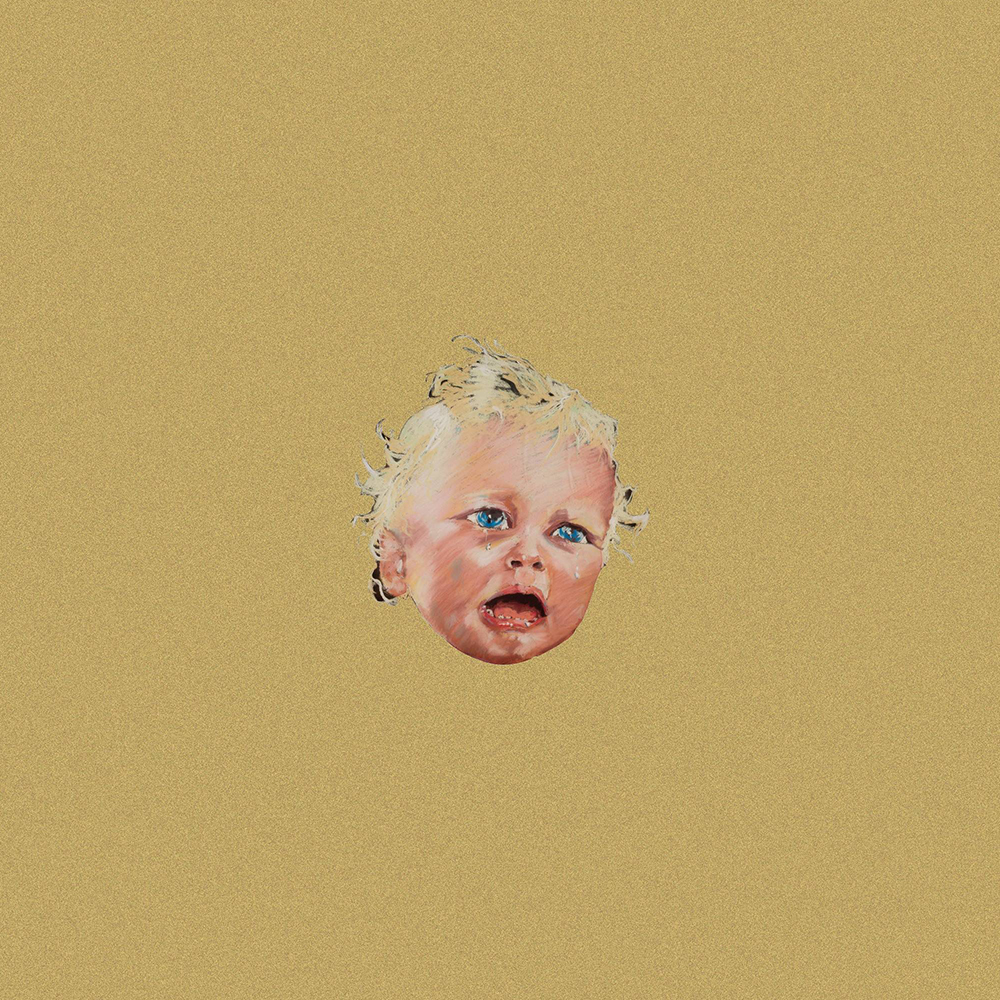
“To Be Kind”

Swans

This is a masterpiece of Rock Music.

Swans, led by front-man Michael Gira, adapt rock to our current musical climate by making it more colossal, menacing, robust, and abrasive- not more palatable.
This is a track-by-track commentary of thoughts on this record:

Screen Shot: Stunning way to begin a record.
Opening with a repetitive and impending bass line, this track continually grows and adds layers of piano, drums and other various instruments until the climax arrives where Gira roars “Here, now! Here, now!…” until the chaos collapses, bringing it to a close. Love the incremental growth and chilling vocal performance.

Just a Little Boy (For Chester Burnett): Eerie, cold, manic, and slow.
After a couple minutes of ambient drones and light drumming, Michael Gira groans sounding tired: “Now I sleep in the belly of woman.” He goes on to tell of the other “bellies” he sleeps in.
If that isn’t disturbing enough, he later screams “I’M JUST A LITTLE BOY” which is responded by unsettling, judgmental laughter. Don’t listen when alone. This one is disturbing.

A Little God In My Hands: Probably the most addictive song on this release.
The trudging, bulky, opening instrumentals lay a strong groove to drive all seven minutes of this track. When the vocals enter it begins to take on a combination of blues and heavy rock.
A block of absolute noise and chaos enters only a minute and a half in, followed by fast, clean guitar picking. After more build and a terrifying/exciting choir section entrance the song finally finishes with yet another blast of brass and electronic noise. I can’t get enough of this one! This is proof that Swans really can write songs with narrative and progression, they just choose not to on much pf the material in this album.

Bring The Sun/Toussaint L’Ouverture: Probably the least accessible song on this release. Spanning over 34 minutes, it demands a lot of patience. However, to me this is undeniably the heart of “To Be Kind.”
The first half is a brutal, punishing piece with some of the most violent, repetitive drumming of any rock song ever. Swans use these massive drums and choirs to transport you to another world. A world that you are conquering.
The only music I’ve heard that feels this colossal is maybe a Mahler symphony. I want to write more about this first half but the sheer magnitude of it leaves little more for me to say, it’s such a mammoth you just have to hear it.
The second half, however, feels quite different. This section feels aggressive and foreign. It’s like an ancient, brutish Arabian Prince challenging a foe to face him. Invigorating work.

Some Things We Do: “We seed” “We cut” “We hate” “We pray” “We crawl” “We F***”
The dark, twisted, sick, cryptic, and obsessive lyrics on this short (in comparison) track are clearly the focus here, however, the instrumentals on this one are brilliant.
Swans incorporate acoustic guitar with heavy reverb and a solo cello to back the haunting, spoken words. Makes for a fantastic listen. They have some mercy on the listener here by including a track that’s less than 8 minutes long.

She Loves Us: A bizarre opening with 6 minutes of ambiance and noise. It can come across aimless but it’s setting the stage. Swans aren’t afraid of taking their time to describe the scenery. Only about 8 minutes in do we begin to hear a clear rhythm in order to set up the powerful entrance of drums, electric guitar, and bass.
As the music grows Michael Gira grows continually more enraged, crazed, and manic, eventually shouting at the top of his lungs “F*** F*** F***” “YOUR NAME IS F***” with incessant, child-like fury. I didn’t know if I was allowed to laugh or if I should just feel uncomfortable. It evokes the same kind of response that you feel when someone is making a scene at the mall and you can see it from a distance.

Kirsten Supine: In the first half of this song we find Swans taking a much needed breather.
For the first five or so minutes a dense electric guitar drones, allowing space for Gira’s vocals which are sung on top of what sounds like a child’s toy piano.
A harsh, marching drum enters to lay the groundwork for noisy strings, bells, distorted guitars, and other various instruments creating a relatively small climax and eventually closing the track. The lyrics seem to be of more importance in this case.
This is another much needed break to the mostly non-subtle tracklist.

Oxygen: Wild, shocking start.
Swans shoot you with intense, abrasive Bass Guitar, playing in dissonant rhythms against the drum line in what appears to be a 2/4 time signature (or possibly just cut-time).
This primitive track only grows in insanity, introducing brass, multiple bass players, intense distorted guitar, and Gira’s iconic maniacal vocal delivery until its climax of thrusting, repeating noise arrives which brings this one to a close.
This track is an 8 minute adrenaline rush. Brace your ears and jump in.

Nathalie Neal: The tone of this track is set with cultish, meditative, ambient vocals along with distant, high pitched piano.
Once again, Gira not keep the same tone throughout the song.
Around the four minute mark there begins a sudden shift in the tempo and Michael’s vocals soar above his band singing “Hey hey hey hey hey hey Nathalie, hey hey hey…”
This one works in lovely contrast to the previous song, considering that it doesn’t contain an unusual amount of dissonant harmony and rhythm, in fact, it’s fairly tonal. Overall this makes it a pretty satisfying and fun listen. Especially since the ending is so subdued and clear.

To Be Kind: What a chilling way to send off a record.
Michael speculates about kindness while accompanied by calm acoustic guitar until Swans pull together one last, gripping climax where the obscene amounts of noise become nearly numbing.

This is a harsh and bold artistic statement, that can be, at times, a difficult listen.
Be patient, this thing is flawlessly written and arranged.
If you’re a lover of prog-rock, noise-rock, or honestly just rock in general, you’ll absolutely love this.